Many companies hold groundbreaking ceremonies when launching a new factory, office, or business facility. For companies expanding from overseas, it is common to hold these ceremonies in a way that incorporates the culture and traditions of their home country.
Japanese companies, in particular, frequently express a desire to hold a traditional Jichinsai (groundbreaking ceremony) or Kuwaireshiki (construction commencement ceremony). These ceremonies, which pray for the success of a new venture and the safety of construction work, also serve as valuable opportunities to strengthen relationships with stakeholders and local communities, even outside Japan.
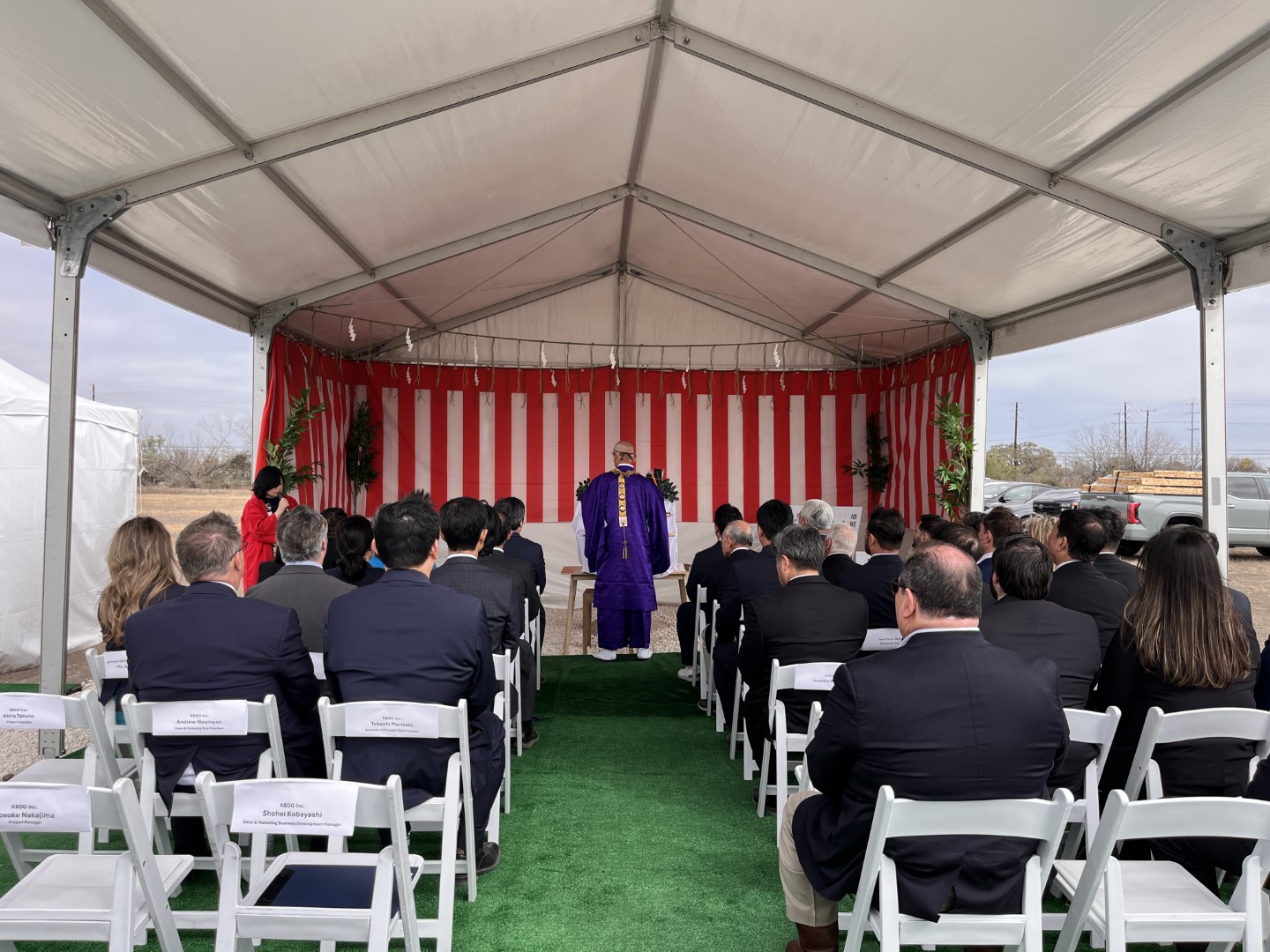
Recently, JTB USA supported a Jichinsai project for Sanko Co., Ltd., which is expanding into Texas from Japan. The project was commissioned by KBD Group, the U.S. subsidiary of Kajima Corporation. From the planning stage through event execution, our team worked closely with stakeholders to make it possible to conduct a traditional Japanese groundbreaking ceremony overseas. Achieving this required a deep understanding of cultural backgrounds, collaboration with subject-matter experts, and thoughtful consideration for local participants.
Building on insights shared in our blog, our blog featuring the "Zero Anniversary", this article uses this project as a case study to introduce key considerations and best practices for planning and executing a successful Jichinsai overseas.
1. Clarifying the Purpose
As construction of the new facility began, our client expressed a desire to hold a traditional Jichinsai in Texas. However, the objective was not simply to replicate the ceremony exactly as it would be conducted in Japan.
The primary goal of this project was:
To preserve and honor the cultural values and traditions that have long been important to the company, while creating a meaningful and relatable experience for local participants.
With this in mind, we sought to respect the traditional rituals and spiritual significance of the ceremony while adapting its presentation to suit the cultural background and expectations of attendees in the United States.
2. Understanding Stakeholders and Managing Expectations
The ceremony brought together a diverse group of stakeholders, including executives and employees of Sanko Co., Ltd. from both Japan and the United States, business partners, construction professionals, government representatives, and members of local economic development organizations.
Each group attended with different expectations and objectives. For Japanese participants, the ceremony represented an important corporate milestone and an opportunity to pray for construction safety and business success. For local guests, however, it served as an opportunity to learn about the investment project, understand its impact on the regional economy, and gain insight into the company’s vision.
Understanding these varying perspectives was essential in designing a ceremony that resonated with all participants.
3. Designing the Message
In addition to its traditional purpose of praying for safety and prosperity, the ceremony served as a platform to communicate Sanko’s vision for its U.S. expansion.
While respecting the traditions and values that are important to Japanese companies, we carefully crafted messages that would also resonate with local government officials and business leaders. Key themes included:
Contribution to the local community
Job creation
Long-term partnerships
Sustainable growth
The messaging strategy was designed to bridge both cultural and business perspectives, ensuring that the ceremony held significance for stakeholders on both sides of the Pacific.
4. Designing the Participant Experience
Many stakeholders, particularly government officials and local economic development representatives, have limited exposure to Japanese culture. Simply conducting a traditional Shinto ceremony without explanation could have left participants unsure of its significance, reducing engagement and understanding.
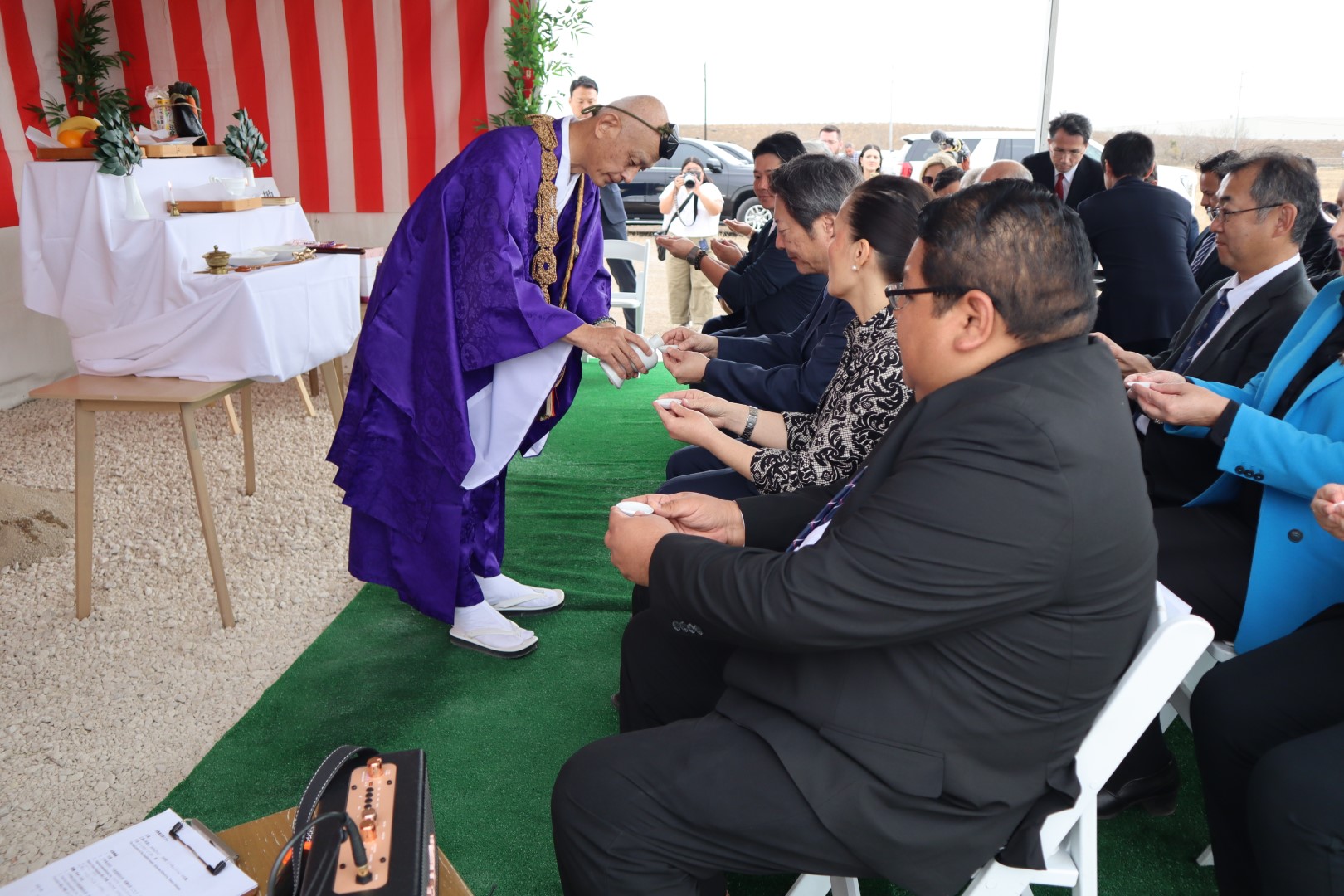
To address this, we carefully designed the ceremony program, flow, and participant guidance so that attendees could appreciate both the purpose and meaning behind the ritual while preserving its solemn and respectful nature.
photo credit to KBD Group.
Explaining the Ritual at the Right Time
A Jichinsai consists of many symbolic actions, each carrying its own meaning. Providing detailed explanations throughout the ceremony could interrupt its solemn atmosphere, while offering too little information could leave participants confused.
To strike the right balance, we held planning sessions with the officiant, the bilingual emcee, and company representatives to determine when and how much explanation should be provided.
Ultimately, we chose to begin the ceremony with an overview of its purpose and structure, followed by brief explanations before key ritual segments. This approach helped attendees understand what was taking place without diminishing the ceremony’s traditional character.
Structuring the Program and Timing
The ceremony was held outdoors in the San Antonio area, making Texas weather and participant comfort important considerations.
In addition, business events in the United States often favor concise and efficient programs, and many attendees may not be accustomed to lengthy ceremonial proceedings.
We therefore designed a program that maintained the necessary rituals and formality while ensuring that the overall event remained engaging and appropriately timed.
photo credit to KBD Group.
Venue Setup and Ceremony Environment
Because the event took place at an active construction site, creating a safe and comfortable environment was essential.
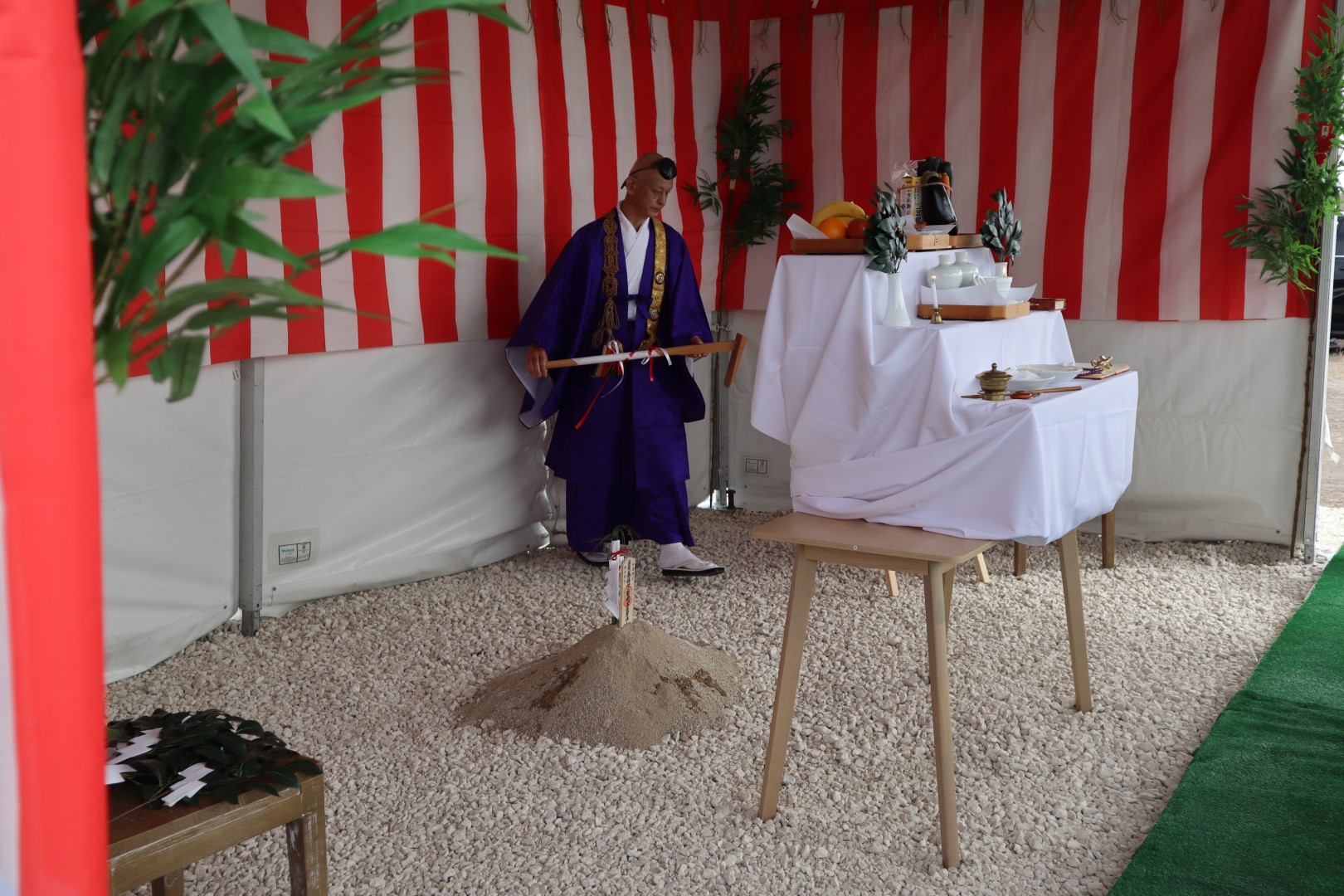
Tents were installed to provide shade and protection from the Texas heat. Traditional red-and-white ceremonial draping was also incorporated to create an atmosphere consistent with Japanese ceremonial traditions and visually communicate the significance of the occasion.
Additional logistical considerations included portable restroom facilities, vehicle access planning, and other site infrastructure requirements. KBD Group managed safety standards and regulatory compliance, helping ensure both operational efficiency and participant safety.
photo credit to KBD Group.
Procuring Ritual Equipment and Ceremonial Items
The ceremony itself was conducted by an officiant arranged by Sanko Co., Ltd.
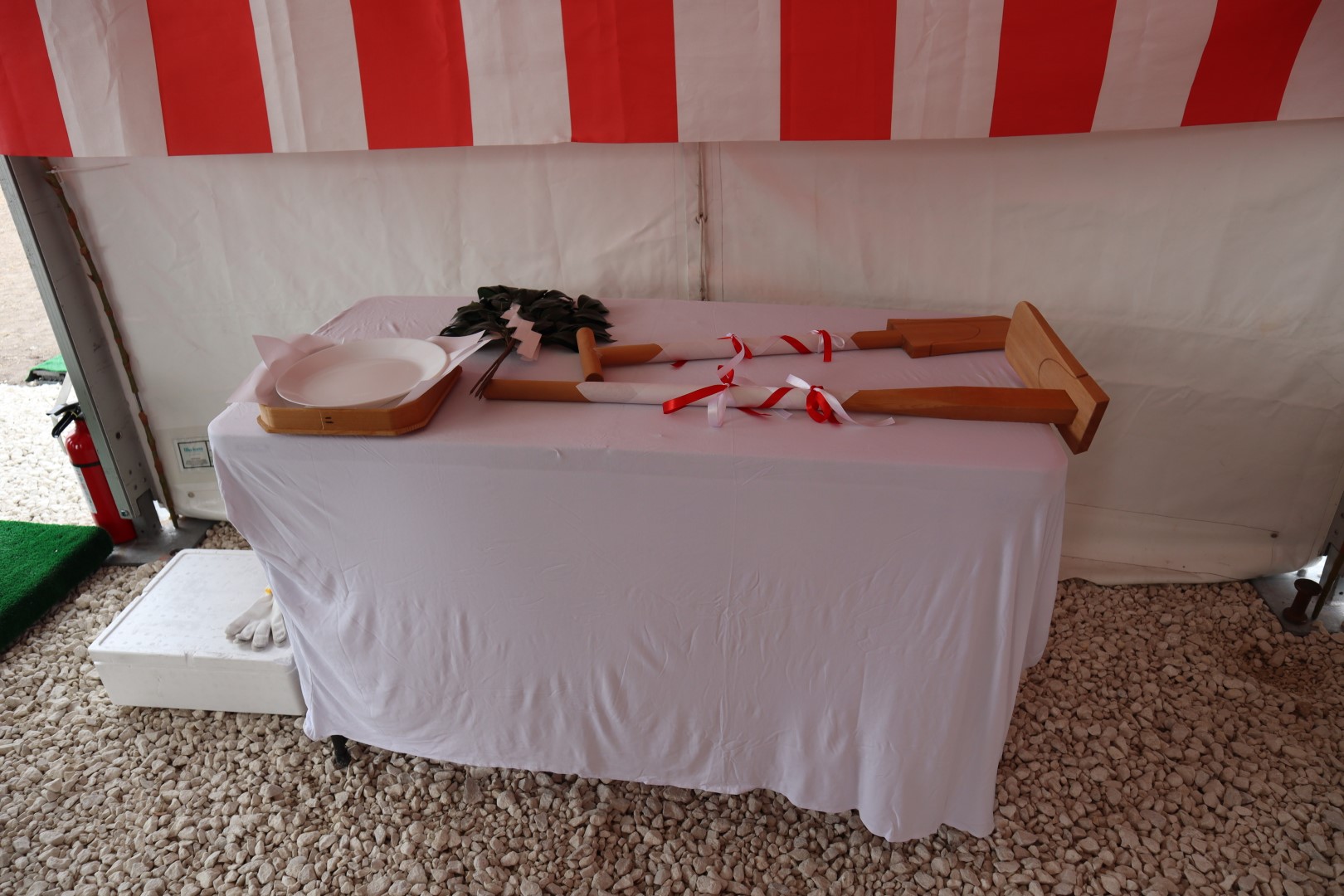
With guidance from a Japan-related ceremonial specialist based in the United States, we sourced the necessary ritual equipment and ceremonial items through a combination of local procurement and shipments from Japan. This approach allowed us to preserve the authenticity and dignity of the ceremony despite being held overseas.
Event Flow and Cultural Interpretation
The bilingual emcee played a role that extended far beyond simple event facilitation or interpretation.
Throughout the ceremony, the emcee helped English-speaking participants understand not only what was happening, but also why each ritual was performed. This cultural interpretation was particularly valuable for attendees experiencing a Japanese ceremonial tradition for the first time.
By carefully bridging cultural differences, we were able to create an event experience that felt natural and meaningful to both Japanese and American participants.
Networking Reception (Naorai)
Following the ceremony, a buffet-style networking reception was held as a modern interpretation of Naorai, the traditional gathering that follows a Shinto ritual.
The reception provided an opportunity for stakeholders to interact in a relaxed setting, fostering relationship-building and business dialogue. This combination of ceremonial significance and practical networking helped create a balanced and meaningful experience.
The Value JTB USA Provides
Groundbreaking ceremonies and similar events with significant cultural and religious meaning, such as Jichinsai, require far more than simply arranging a venue and equipment.
Successful execution depends on clearly defining objectives, understanding stakeholders, and strategically designing the participant experience and key messages.
When conducting a traditional Japanese ceremony overseas, particularly in the United States, an understanding of cultural and religious context is essential. Expert guidance before and during the event can play a critical role in ensuring authenticity, clarity, and participant engagement.
At JTB USA, we view milestone events such as market entry projects, new facility openings, and groundbreaking ceremonies not merely as standalone celebrations, but as strategic opportunities for communication and relationship building.
Working closely with subject-matter experts, we provide end-to-end support, from planning and design to on-site execution, to help create meaningful experiences that connect companies, stakeholders, and local communities.
If you are considering a Jichinsai, groundbreaking ceremony, anniversary event, or other corporate milestone program in the United States, we would be delighted to discuss how we can support your goals.
For more on the concept and strategic importance of Zero Anniversary Events, the following article explains how Groundbreaking Ceremonies and other foundational milestones can be designed as meaningful starting points for corporate growth rather than simple formalities.
Turn ideas and insights into meaningful experiences.
MEETINGS
Plan and manage meetings with greater efficiency, clarity, and impact through experienced support from preparation to on site execution and post event review.
Create memorable incentive programs that motivate participants, strengthen relationships, and connect shared experiences with your business objectives.
Bring your objectives, audience, content, venue, and production together to create corporate events that strengthen engagement and leave a lasting impression.
Build a strategic exhibition experience that strengthens your brand, connects with the right audiences, and turns trade show participation into measurable business opportunities.
Strategic Meeting Management (SMM) helps organizations move beyond managing meetings individually by connecting processes, spend, suppliers, technology, risk, and data across the enterprise. This article explains the seven key areas of SMM and how greater visibility can improve efficiency, compliance, and business value.
As business events continue to recover worldwide, experienced meeting professionals remain in short supply. Organizations are increasingly expected to deliver strategic, high quality meetings with limited internal resources. This article explores how Corporate Meeting Management (CMM) and Certified Meeting Professionals (CMPs) help organizations improve governance, attendee experience, and measurable business outcomes.
What if sports hospitality could become one of your most powerful corporate engagement strategies? See how JTB's Los Angeles Dodgers partnership transforms game day into an unforgettable business experience.